



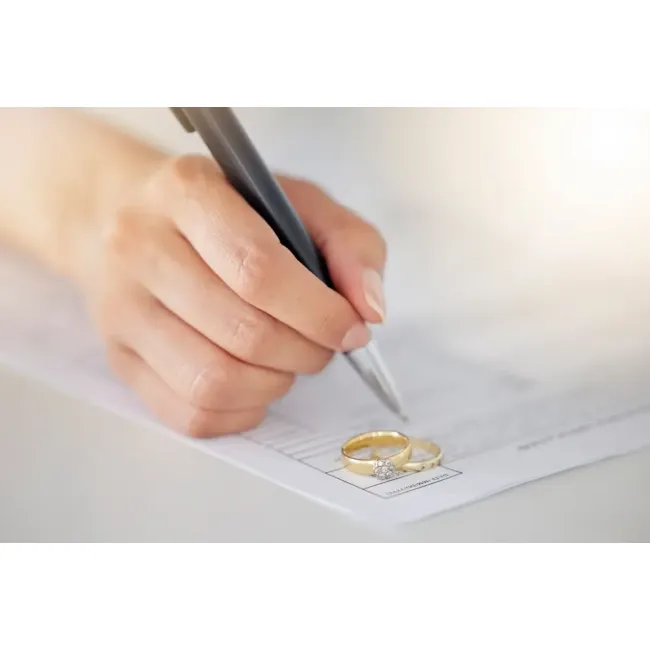
Selling A Diamond Ring After Divorce
For most people this isn't really about the ring or the diamond itself. They want it dealt with so they can get on with the rest of their life. We won't pretend the ring is worth what you paid for it, and we won't overload you with sympathy you didn't ask for.
What the ring is actually worth, who has to sign off before you can sell, and the three things you can do with it. Most of this is written around engagement rings since that's usually what people are holding at this stage, but it applies just as well to a wedding band, an upgraded ring, or some estate piece that got pulled into the marriage.
IN THIS GUIDE

WHO ACTUALLY OWNS THE RING
Before you sell anything, make sure it's actually yours to sell. In the US, whether an engagement ring counts as separate or marital property depends on your state and on the details: when it was given, whether it counted as a gift, what your settlement spells out. The UK draws those lines differently. We buy diamonds for a living. We're not lawyers, and we're not going to guess at your situation.
If there's any question about who the ring belongs to, get your attorney to sort it out before it's listed or handed to anyone. Ten minutes with a lawyer beats a mess down the road. And to be clear, this page explains how the sale works. We are not lawyers so we can't give you direct advice.
WHAT THE RING IS ACTUALLY WORTH
We have these conversations all the time. The figure on your appraisal is a replacement value, meaning what it'd cost to buy the ring new at retail for insurance. That number is not what we or another buyer pays you. Nobody in the resale market pays it, and if a buyer claims they will, they're making it back on you somewhere else.
What the ring is worth comes down to the stone. Carat, color, clarity, cut, and whether a GIA report backs it up. The setting counts for a lot less than people expect, since you're really selling the diamond and the gold just gets weighed as gold. Branded jewelry is the one exception. A Tiffany ring, or another name buyers recognize, can hold a premium the setting alone never would. So a ring that felt like it cost a lot when you bought it can be valued with a number that surprises you. That gap isn't us being cheap about it. It's just what retail-to-resale looks like, and you'll find this with any buyer.
The only number worth anything is a real offer on your specific stone. Anyone can value it objectively but they aren't putting down money to buy it. Website sliders and rule-of-thumb percentages won't tell you what your diamond is actually worth. A real offer will. We give you one.
THREE THINGS YOU CAN DO WITH IT
You've got three moves here. Sell it, rework it, or sit on it. Most people sell, but it's worth looking at all three first. Which one's right mostly comes down to whether you want the money or you just want the ring gone.
SELL IT
If cash is the goal and you want the ring gone, you've got a few routes. They're not equal.
A private sale, where you list it yourself and deal with a stranger, can bring the most money in theory. It's also the biggest hassle. Buyers for a used diamond ring are thin on the ground, the ones who show up haggle hard, and you're arranging to meet someone to hand over something valuable. We find all the time that private buyers turn out to be professional buyers just looking for a cheap deal. These sales can drag on for months. Consignment passes the job to a shop or a website, but then you're waiting for it to sell, and they take their cut when it does. Pawning is quick and it's the lowest number you'll be offered anywhere. It's closer to a loan against the ring than a real sale.
Auction is the one that catches people out. It looks like a strong possibility of a strong price. Then the fees pile up: seller's commission, buyer's premium, photography, insurance, and every one of them comes out of your end. We've watched plenty of sellers clear far less than they planned on once all of it settled. More on that below.
Selling to a wholesale buyer like us is the dull, straightforward option. You tell us about the ring, we make a real offer on the stone, and if you say yes, you're paid and it's done. There's nothing to list and nobody to meet. You're not left waiting on some stranger to come through. We won't hand you a retail number, since nobody in resale pays retail, but the offer's fair, it comes fast, and there are no fees eating into it.
REMOUNT IT — KEEP THE STONE, LOSE THE RING
This is the one people forget about. You don't have to sell the diamond, and you don't have to keep wearing it the way it is. The stone can be reset into something that's actually yours, a piece that suits your life now rather than the marriage. Think a pendant, a right-hand ring, a pair of earrings, or a setting that looks nothing like the original. It's the same diamond doing something completely different.
It deals with what the ring actually stands for, and you don't eat the resale haircut to do it. The stone keeps its full value instead of getting sold into a market that pays cents on the retail dollar. You also dodge the version of this where you let go of a diamond and wish you hadn't.
One hard rule from White Pine. Leave the stone in its setting until a professional takes it out. Prying a center diamond loose yourself, or letting someone careless have a go at it, risks chipping the stone, and damage drops its value fast. A proper remount means a bench jeweler removing and resetting it under controlled conditions. Which is exactly why you don't cut corners on this part. Tell us about your diamond and we'll walk through what it could become and how the work actually goes.
HOLD IT
The third move is to do nothing with it for the moment. Sometimes that's the right call. Maybe you're not ready, maybe the timing's off, maybe you just want some room before deciding.
Just don't hold it because you think the price is going up. The diamond market's been all over the place the past few years, lab-grown stones have pulled a big chunk of demand, and nobody can promise natural prices will rise. Waiting on a rebound that may never land is how a ring ends up in a drawer for ten years and then sells for less than it'd bring today, then think about inflation on the stuff you could buy with the money. Hold it because you genuinely want to keep it. Not because you're trying to be optimistic about diamond prices.
WHAT GETS YOU A STRONGER OFFER
The GIA report is the one that matters most. It's an independent grade (gold standard) of the stone, so it takes the guesswork, and the discount a buyer applies for uncertainty, out of the offer. If you have it, dig it out. An old appraisal helps too, mainly for the stone's specs, though keep in mind it's a replacement value and not what you'll actually be paid. An original receipt is nice to have, more about provenance than the price it fetches.
No paperwork at all? Not a problem. Plenty of rings reach us with nothing on file, and we can grade the stone on its own. The documents just tighten the number and speed things up.
WHITE PINE'S TAKE
I run the diamond operations here at White Pine. He's the one valuing what stones are worth, so here's his read, in his words.
"The mistake I see most often is people going to auction without understanding the fees. It looks like the way to get paid the most, and then commission and premiums and all the rest come off the sale price and the seller walks away with a lot less than they pictured. Read the fine print before you list anything.
On what to do with the ring — don't pull the center stone out to sell it loose. The risk of damaging the diamond isn't worth it, and a chipped stone drops in value fast. Sell it set, or have it professionally remounted into something new. Those are your two good options.
If you're going to sell, my honest advice is to move now rather than wait. The market's been volatile with lab diamonds changing demand, and there's no guarantee prices go up. And understand going in that an appraisal is not a sale price — that appraised figure is retail replacement value, and what you actually get is a real fraction of it. That surprises people every time, so I'd rather you hear it from me first.
Most people just want to sell and move on, and that's what we see. But if the number isn't where you hoped, before you let the stone go for less than you'd like — think about turning it into a new style instead. You keep the diamond, you get something that's actually yours and it feels new without memories, and you're not stuck watching a market that may not come back."
Questions about your stone specifically? Reach me at bnorton@whitepinediamonds.com.
HOW SELLING OR REMOUNTING WITH US WORKS
It kicks off the same way whether you're selling or reworking the stone. Get in touch and tell us about the ring: whatever details you have, the GIA report (or other certificates) if there is one, a couple of photos. We look at your actual diamond rather than lumping it into a category, then come back to you with a real offer.
From there it's yours to call. Accept the offer and you're paid out. Or, if you'd rather hang onto the stone, we get into remounting it into something new. No pressure whichever way you go, and it costs nothing to find out what the ring is worth.
QUESTIONS PEOPLE ASK US
Do I need the GIA report or appraisal to sell?
No. Paperwork makes the offer tighter and faster, but we can evaluate the stone without it. Lets us see whatever certificates or appraisals you have.
Do you buy the setting and gold too, or just the diamond?
Both. The diamond drives the value. You're mostly selling the stone, but the whole ring is on the table.
Can you really turn my old ring into something new?
Yes. We can remount into something different, whether that's a pendant, a new ring, or earrings. You keep the diamond and lose the association. Ask us and we'll go through what's possible with your stone.
What if my ex and I jointly owned it?
Then sort out ownership before you sell. Whether the ring is yours, marital property, or shared depends on your state or country and your settlement. Check with your attorney first, since we can't advise on that part.
Is this private?
Yes. This is a direct conversation with us about your ring. Nothing gets listed publicly with your name attached.
How fast can I be paid?
Fast, once you've accepted an offer. There's no buyer to wait on and no consignment sitting on a shelf. Quick payment is most of why people come to us in the first place, we make payment the day you accept your offer.
Want to know what it's actually worth? Start your offer