



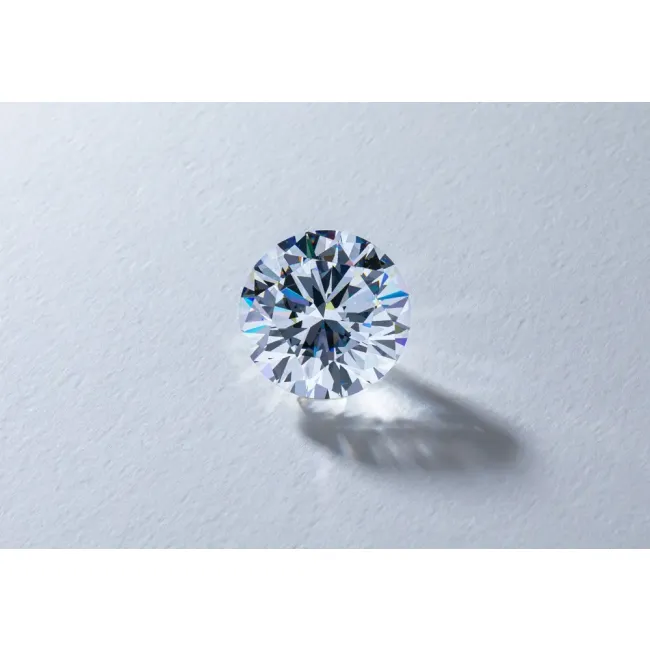
HOW TO SELL A LOOSE DIAMOND
You've got a loose diamond and you want to turn it into money. The goal is simple. The process isn't complicated either. But the order you do things in matters, and skipping a step usually costs you money or weeks of wasted time. There is a large caveat to mention before going further, lab-grown diamonds are nearly impossible to resell as they hold no value, so this article focuses on natural stones.
We buy loose diamonds every day, from single stones out of old settings to full estate parcels. This is the process we'd follow if we were in your shoes.
IN THIS GUIDE

- Step 1: Know what you have
- Step 2: Understand what it's worth
- Step 3: Pick where to sell
- Step 4: Get the diamond evaluated
- Step 5: Review the offer and get paid
- Selling multiple stones or melee
- Frequently asked questions
STEP 1: KNOW WHAT YOU HAVE
Before you contact a buyer, gather whatever paperwork exists. A grading report is the big one. If your diamond came with a GIA report, find it — it tells any buyer the carat weight, color, clarity, and cut without them having to take your word for anything, and it speeds up every conversation.
No report? Don't panic, and don't rush out to buy one either. Grading a stone costs money and takes weeks, and for most diamonds under a carat the report won't change the offer enough to cover its own cost. A serious buyer will grade the stone themselves as part of the evaluation. That's what we do, and it's standard across the wholesale trade.
What helps even without a report: the original receipt, an old appraisal, or any note about where the diamond came from. Appraisals aren't the same as offers (more on that below), but they usually record the stone's measurements and stated grades, so a buyer has a starting point.
STEP 2: UNDERSTAND WHAT IT'S ACTUALLY WORTH
The number on your insurance appraisal is not what your diamond will sell for. Appraisals estimate retail replacement cost — what it would cost to buy a comparable stone new, at full retail, tomorrow. When you sell, you're selling into the wholesale market, and wholesale prices sit well below retail. They have to. Every business needs to take a margin.
So what will you get? It depends on the stone. Size, color, clarity, cut quality, fluorescence, and current market demand all move the number, and they move it further than the calculators let on. A well-cut 1.50 carat with strong color is a different conversation than a shallow 0.60 with a visible inclusion. Anyone quoting you a firm price sight unseen is guessing.
The only accurate number is a real offer on your actual stone. Everything before that is an estimate, including ours.
STEP 3: PICK WHERE TO SELL
You've got options, and they're not equal. Each one trades off speed, price, and effort differently.
WHOLESALE DIAMOND BUYER
Speed: Days
A firm offer based on a professional grading, paid promptly. Strongest fit for loose stones, since there's no jewelry markup to argue about.
LOCAL JEWELER
Speed: Same day
Convenient, but many jewelers don't buy loose stones outright. They'll offer consignment or store credit instead of cash.
PAWN SHOP
Speed: Same day
Fastest cash available, and typically the lowest offer. Pawn shops aren't diamond specialists and price accordingly.
AUCTION OR CONSIGNMENT
Speed: Weeks to months
Can work for large, rare, or signed pieces. Fees and seller commissions eat into the result, and there's no guarantee of a sale.
ONLINE MARKETPLACE
Speed: Unpredictable
You set the price, but you're also handling strangers, payment risk, and shipping a diamond to someone you've never met. We don't recommend it.
Our bias is obvious — we're a wholesale buyer. But the logic holds up. A loose diamond has no setting, no brand, no story a retail buyer will pay extra for. It's basically a commodity, graded on characteristics, and the people who trade it daily are the ones who'll actually pay a fair number for it.
STEP 4: GET THE DIAMOND EVALUATED
With a wholesale buyer, evaluation works one of two ways: you visit in person, or you ship the stone in. Both should be free. Both should come with zero obligation to accept the offer. If a buyer charges an evaluation fee or pressures you to commit before you've seen a number, walk.
Shipping a diamond sounds nerve-wracking the first time. In practice it's routine. The trade moves stones through insured mail every day. A legitimate buyer sends you a fully insured shipping label, the package is tracked door to door, and the stone is covered for its value the entire way.
Once the diamond arrives, it gets examined and graded by people who do this for a living. At White Pine, evaluations run under Bill Norton, our VP of Diamond Operations (bnorton@whitepinediamonds.com). His team grades the stone, checks it against current wholesale market pricing, and turns an offer around quickly, usually within a day of receipt. And if you decline, the diamond ships back to you insured, no charge, no hard feelings.
STEP 5: REVIEW THE OFFER AND GET PAID
A good offer comes with an explanation. What the stone graded, what's driving the price, what the market's doing. If all you get is a deadline, that's a red flag — urgency is a sales tactic.
You're allowed to get more than one offer. Comparing two or three real offers on the same stone tells you more about your diamond's value than any calculator or forum thread ever will. Just make sure you're comparing offers against other offers. An appraisal doesn't belong in that comparison. It was never an offer to begin with.
Accept, and payment should be fast. Wire or check, usually within a business day or two. Much slower than that, and I'd ask why.
SELLING MULTIPLE STONES OR MELEE
Got a parcel of small diamonds instead of one big one? It's a slightly different process. Melee, small diamonds generally under a fifth of a carat, doesn't get graded stone by stone. It's sorted, sieved, and priced by the parcel. Most retail-facing buyers won't touch it. Wholesale buyers will, because melee is the backbone of the recycled diamond trade.
If you're a jeweler, dealer, or estate handler sitting on accumulated melee, broken-out stones, or mixed parcels, that's also part of our business. Send the parcel in the same way you'd send a single stone. We sort and price the entire lot and make one offer on all of it.
FREQUENTLY ASKED QUESTIONS
DO I NEED A GIA CERTIFICATE TO SELL A LOOSE DIAMOND?
No. A report helps, and if you have one, include it. But a professional buyer grades every stone independently anyway, so an ungraded diamond is completely sellable. Don't pay for grading just to sell.
HOW LONG DOES THE WHOLE PROCESS TAKE?
With a wholesale buyer, usually under a week from first contact to money in hand. Shipping is the longest part. The evaluation itself typically takes a day.
IS IT SAFE TO MAIL A DIAMOND?
Yes, when it's done right. Insured, tracked shipping with a label provided by the buyer is the industry norm. Stones move this way through the trade constantly. The diamond is covered for its full value in transit, both directions.
WILL I GET WHAT MY APPRAISAL SAYS?
No, and no honest buyer will tell you otherwise. Appraisals estimate retail replacement cost for insurance. Selling happens at wholesale. The gap between the two isn't anyone cheating you — it's how the market is built.
WHAT ABOUT DIAMONDS STILL IN A SETTING?
We buy those too. If the stone's still in a ring or other mounting, don't remove it yourself. You risk chipping the girdle. Send the piece as-is and let the evaluation account for both the stone and the metal.
Ready for a real number instead of an estimate? Send us the details and we'll take it from there.