



SELL VAN CLEEF & ARPELS JEWELRY: WHAT YOUR PIECE IS REALLY WORTH AND WHERE TO SELL IT
Van Cleef & Arpels is one of the rare jewelry houses where selling does not have to mean accepting a steep loss. Pieces from the Alhambra line in particular have a reputation among collectors for holding their value far better than most jewelry, which puts sellers in a stronger position than they would be with almost any other designer brand.
That strength comes with its own set of considerations. Authentication is stricter, counterfeits are rampant, and the right buyer matters more than it does for mass-market labels. Knowing what drives value, what your specific collection commands, and how to verify a buyer's credibility is what separates a good sale from a missed opportunity.
This guide breaks down how Van Cleef & Arpels resale actually works, what your piece is likely worth in today's market, and how to sell it without leaving money on the table.
IN THIS GUIDE
- Why Van Cleef & Arpels Is Different From Most Designer Jewelry
- Which Van Cleef & Arpels Collections Hold the Most Value
- Authentication: Why It Matters More With VCA
- How to Sell Van Cleef & Arpels Jewelry
- Best Places to Sell Van Cleef & Arpels
- Mistakes That Cost VCA Sellers Money
- Frequently Asked Questions
WHY VAN CLEEF & ARPELS IS DIFFERENT FROM MOST DESIGNER JEWELRY
Most fine jewelry loses a substantial chunk of its value the moment it leaves the boutique. Van Cleef & Arpels is a genuine exception. Owned by Richemont, the same group behind Cartier, the house follows a deliberate strategy of limited production and regular retail price increases — typically in the range of 4% to 8% per year. Every time prices rise at retail, the secondary market value of existing pieces is pulled upward with it.
The result is a resale market that behaves differently from most brands. Where typical designer jewelry resells for a fraction of its retail price, desirable Van Cleef & Arpels pieces tend to recover a meaningful share of what they originally cost — and the most sought-after styles hold up especially well. Demand is steady enough that the right piece, offered to the right buyer, often moves quickly.
What this means for a seller is straightforward: your expectations can be more optimistic than they would be for most designer labels, while authentication, condition, and the right buyer matter just as much. Exactly what a given piece returns depends on its collection, materials, condition, and current demand — so the figures here are context, not a promise. A real offer on your specific piece is the only accurate number.
WHICH VAN CLEEF & ARPELS COLLECTIONS HOLD THE MOST VALUE
Not every Van Cleef & Arpels piece performs the same way on the secondary market. The collection a piece belongs to is one of the strongest predictors of what it will fetch. The table below covers the lines we see most often and how they tend to perform.
| Collection | Resale Strength & Notes |
|---|---|
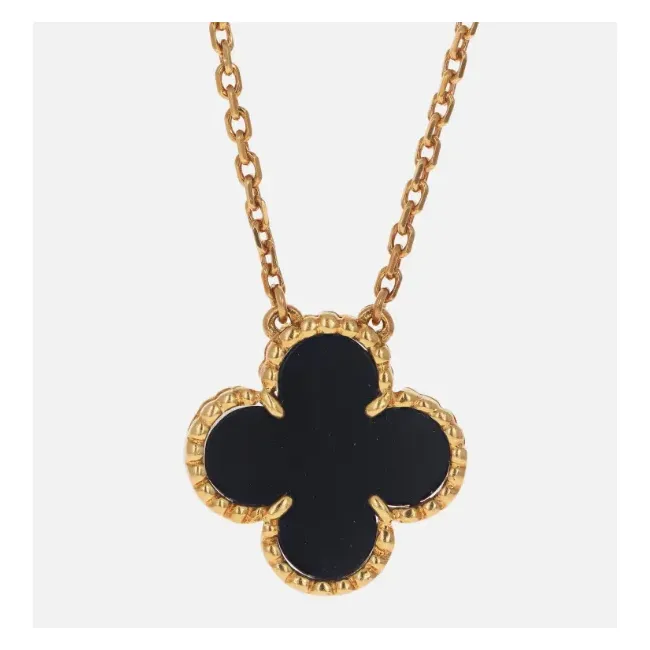
| Vintage Alhambra | The strongest performer. The four-motif clover in onyx, mother-of-pearl, or malachite is the most recognized design the house makes and the most consistently in demand. |
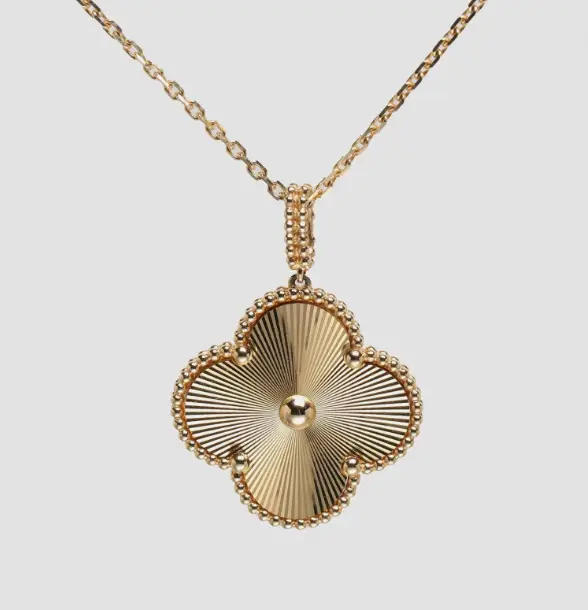
| Sweet & Magic Alhambra | Smaller and larger variations on the clover. Sweet Alhambra offers the most accessible entry point and still resells reliably; Magic Alhambra's mixed-size motifs draw collector interest. |
| Perlée | Defined by signature gold beadwork. Bangles and rings hold value well, particularly the diamond-set versions, and have a dedicated following of their own. |
| Frivole & Lucky Spring | Heart-petal and floral motifs. Strong with the right buyer, though demand is narrower than Alhambra, so finding a specialist matters more. |
| Pavé Diamond & High Jewelry | Fully pavé Alhambra and one-of-a-kind high jewelry sit at the very top of the resale range. Rare configurations have achieved six figures at auction. |
| Matching Sets | A coordinated bracelet, necklace, and earrings in the same stone command a premium over the same pieces sold individually. Keeping sets together pays off. |
A practical note for anyone selling: stone and metal still matter within every line. Mother-of-pearl, onyx, malachite, and lapis are the classic Alhambra materials, and pieces set with diamonds in 18k gold sit at the higher end. The combination of an iconic collection and premium materials is where the strongest offers come from.
AUTHENTICATION: WHY IT MATTERS MORE WITH VCA
Here is something that genuinely sets Van Cleef & Arpels apart from a brand like David Yurman: the Alhambra clover is one of the most counterfeited jewelry designs in the world. Tens of thousands of fakes circulate every year, and the better ones can fool an untrained eye. Because authentic pieces are so valuable, buyers scrutinize them closely — which means knowing what genuine markings look like protects you and speeds up the sale.
Every authentic Van Cleef & Arpels piece carries four signals working together. Knowing where to find them on your own piece is the first step before you approach any buyer.
THE MAKER'S MARK
Genuine pieces are signed "Van Cleef & Arpels" or "VCA" — never a partial "Van Cleef" on its own, which is an immediate red flag. On Alhambra, it sits on the clover station closest to the clasp; on rings, inside the shank; on earrings, on the posts or clips.
THE METAL HALLMARK
VCA uses only 18k gold and platinum. Gold is marked "750" (often "Au750"); platinum reads "950" or "Pt950." You will never see "14K," "585," or "10K" on a genuine piece — those markings mean it is not authentic.
THE SERIAL NUMBER
Each piece has a unique serial number, usually five to seven characters, etched near the signature and hallmark. The engraving should be crisp and evenly spaced. VCA can cross-reference a serial against its records in many cases.
THE CRAFTSMANSHIP
The beaded border around an authentic Alhambra motif is perfectly uniform, and the clover edges are crisp and weighty. Fakes often show rounded, dull, or uneven edges. The French maker's mark with the Place Vendôme column is another genuine indicator.
If any of these are unclear or absent, do not assume the worst on your own — but do expect a serious buyer to verify them. A reputable specialist will authenticate the piece as part of the evaluation, which is exactly why working with an experienced buyer rather than a general pawn channel protects your interests.
HOW TO SELL VAN CLEEF & ARPELS JEWELRY (STEP-BY-STEP)
| Step | Action | What To Do |
|---|---|---|
| Step 1 | Gather Documentation First | With VCA, paperwork is worth real money. Locate the original certificate, the sage-green pouch and box, and any receipt. Complete documentation can meaningfully increase the value of an Alhambra piece, so this step comes before anything else. |
| Step 2 | Identify Collection & Specs | Pin down the collection, the stone, the metal, and the motif count (for Alhambra, a 5-motif bracelet and a 20-motif necklace are very different pieces). The more precisely you can describe it, the more accurate your quotes will be. |
| Step 3 | Get Specialist Offers | Because VCA holds its value, the spread between a knowledgeable buyer and a generalist can be significant. Request offers from buyers who specifically handle Van Cleef & Arpels — a real purchase offer, not a generic appraisal, reflects today's market. |
| Step 4 | Complete the Sale Securely | Ship using insured, tracked, signature-required delivery, or handle the transaction in person. For a high-value VCA piece, insured shipping is non-negotiable. Confirm the payment method and timeline in writing before the piece leaves your hands. |
BEST PLACES TO SELL VAN CLEEF & ARPELS JEWELRY
Where you sell a Van Cleef & Arpels piece has a bigger impact on the outcome than it does with lower-value brands. A buyer who does not understand the collection, or who cannot confidently authenticate it, will almost always underpay. Here is how the main options compare.
| Selling Option | Best For | Pros | Cons | My Take |
|---|---|---|---|---|
| Designer Jewelry Specialist | Most VCA sellers | Understands the collections; authenticates in-house; competitive offers | May require shipping or an appointment | The strongest balance of price and security |
| White Pine Diamonds | Alhambra, Perlée & diamond pieces | Specialist evaluation; transparent process; fast, no-pressure offers | Requires shipping or in-person appointment | A confident choice for VCA of any value |
| Auction House | Rare & high jewelry pieces | Bidding can push exceptional pieces well above estimate | High fees; slow; outcome not guaranteed | Worth it only for truly rare pieces |
| Consignment Platform | Patient sellers | Can reach retail-adjacent prices given VCA demand | Commission fees; payment only after the piece sells | Good if you can wait weeks for funds |
| Local Jeweler / Pawn | Immediate cash | Same-day payment; piece stays in hand until sold | Often undervalues VCA; limited brand expertise | Usually the weakest payout — avoid for VCA |
MISTAKES THAT COST VAN CLEEF & ARPELS SELLERS MONEY
UNDERESTIMATING THE PIECE
This is the opposite of the usual jewelry mistake. Many VCA owners assume their piece depreciated like ordinary jewelry and accept a lowball offer. In reality, Alhambra and similar lines tend to hold their value far better than most — know what you have before you sell.
DISCARDING THE PAPERWORK
The certificate, box, and pouch are not just sentimental. With VCA they translate directly into a stronger offer on Alhambra pieces. Never sell without first checking whether you still have the original materials.
SELLING TO A GENERALIST
A buyer who cannot confidently authenticate or value VCA will protect themselves by offering less. The collection rewards specialists who know exactly what a 10-motif onyx necklace is worth. Match the piece to a buyer who understands it.
BREAKING UP A SET
If you own a matching bracelet, necklace, and earrings in the same stone, selling them together almost always beats selling them piecemeal. Coordinated sets carry a premium that disappears the moment they are split up.
SKIPPING INSURED SHIPPING
A single Alhambra piece can be worth thousands. Shipping anything VCA without insured, tracked, signature-required delivery is a risk no payout justifies. A reputable buyer will provide a prepaid insured label as standard.
IGNORING BUYER CREDENTIALS
Because VCA is so valuable, it attracts opportunistic buyers. Check Google reviews, the Better Business Bureau listing, and how long the business has operated before sending a piece anywhere. A verifiable track record is non-negotiable.
FREQUENTLY ASKED QUESTIONS ABOUT SELLING VAN CLEEF & ARPELS JEWELRY
DOES VAN CLEEF & ARPELS HOLD ITS VALUE?
Yes, better than most jewelry. While typical designer pieces resell for a fraction of their retail price, Van Cleef & Arpels — and the Alhambra line especially — tends to recover a meaningful share of its original cost, with the most sought-after styles holding up particularly well. Regular retail price increases and limited production help support secondary market values, which puts sellers in a stronger position than they would be with most designer jewelry brands. Exactly what your piece returns depends on its collection, materials, and condition. If you also own non-VCA pieces, we buy those too — including services to sell an engagement ring.
DOES VAN CLEEF & ARPELS BUY BACK JEWELRY?
No, Van Cleef & Arpels does not run a public buyback or trade-in program for pre-owned pieces. To sell, you will need to use the secondary market — a designer jewelry specialist, an auction house, a consignment platform, or a resale marketplace. This is standard across the major luxury houses.
CAN I SELL VAN CLEEF WITHOUT THE CERTIFICATE OR BOX?
Yes, but it matters more here than with most brands. A genuine piece can be authenticated through its hallmarks, serial number, and construction even without paperwork. That said, the original certificate, box, and pouch can add roughly 15% to 25% to an Alhambra offer, so it is well worth locating them before you sell.
HOW DO I KNOW IF MY VAN CLEEF IS AUTHENTIC?
Genuine pieces carry four signals: the "Van Cleef & Arpels" or "VCA" maker's mark (never just "Van Cleef"), an 18k gold "750" or platinum "950" hallmark, a unique serial number, and precise, uniform craftsmanship on the motif. Counterfeits often slip up on font, edge symmetry, or metal purity. A specialist buyer will authenticate the piece as part of the evaluation.
WHICH VAN CLEEF PIECES SELL FOR THE MOST?
Vintage Alhambra in onyx, mother-of-pearl, or malachite leads for consistent demand, while fully pavé diamond Alhambra and high jewelry sit at the very top of the range — rare pieces have reached six figures at auction. Longer necklaces with more motifs and complete matching sets also command the strongest offers.
HOW LONG DOES IT TAKE TO SELL A VAN CLEEF PIECE?
Demand for VCA is strong enough that desirable pieces tend to move quickly. A specialist buyer can usually provide an offer within a day of seeing photos or the piece, with payment following within a few business days of acceptance. Consignment and auction routes can reach high prices but take weeks, since payment only follows a sale.
IS IT BETTER TO SELL ALHAMBRA AS A SET OR INDIVIDUALLY?
As a set, in almost every case. A matching bracelet, necklace, and earrings in the same stone attract more buyer interest and a higher combined price than the same pieces sold separately. If you have a coordinated suite, keep it together when you approach a buyer.
FINAL THOUGHTS

Selling Van Cleef & Arpels is a different exercise than selling almost any other jewelry brand. The value is genuinely there, which means the goal is not damage control but making sure you capture what the piece is actually worth. That comes down to three things: confirming and presenting authenticity, gathering the original documentation, and choosing a buyer who understands the collection.
The single biggest avoidable mistake is treating a VCA piece like ordinary depreciated jewelry and accepting the first generalist offer. The brand's resale strength only works in your favor if you sell to someone equipped to recognize it. A real purchase offer from a specialist who has examined the piece — paperwork, hallmarks, condition, and all — is the most accurate read on what the market will pay today.
If you are uncertain about your piece's value, collection, or authenticity, it costs nothing to get a specialist estimate before you commit to anything. With Van Cleef & Arpels, that extra step tends to pay for itself many times over.
Written by Matt Cacioppo, a jewelry industry specialist with experience across diamond buying, estate jewelry evaluation, and luxury brand resale dating back to 2016. His work focuses on helping owners understand resale value, authentication, and market dynamics across the secondary jewelry market. He is currently working as Vice President of Sales.