



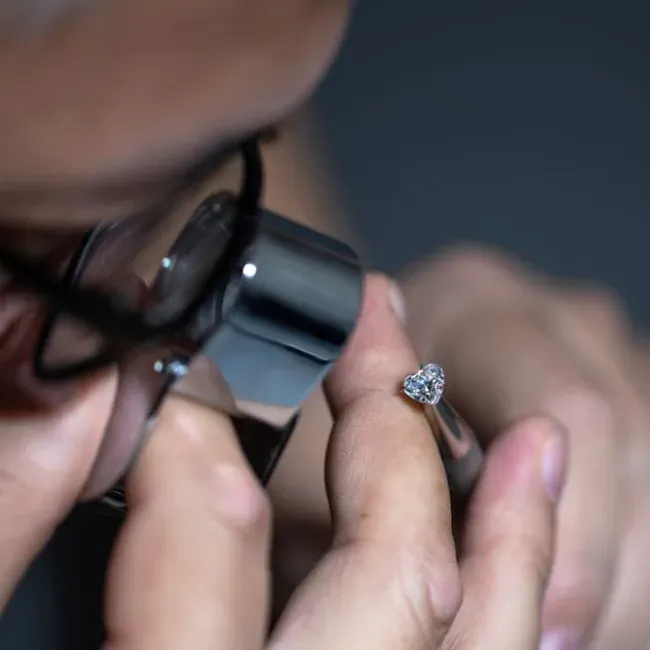
THE LIMITED ROLE OF JEWELERS' APPRAISALS WHEN SELLING YOUR DIAMONDS AND JEWELRY
Many sellers assume that a high appraisal value will translate directly into a high sale price. It rarely does. Understanding exactly what a jeweler's appraisal provides — and what it doesn't — is one of the most important steps you can take before selling diamonds or fine jewelry. Bill Norton, Vice President of Diamond Operations at White Pine, explains what appraisals actually tell you and how to use them appropriately in the selling process.
WHAT IS A JEWELER'S APPRAISAL?
A jeweler's appraisal assesses a piece of jewelry — its metal type, gemstone quality, and overall craftsmanship — and typically assigns a monetary value based on retail replacement cost. That last detail is critical: the value assigned is what it would cost to replace the item brand new, not what it will sell for on the secondary market.
INSURANCE REPLACEMENT VALUE
Most appraisals are designed to establish the cost of replacing a piece if it is lost, stolen, or damaged. This figure reflects full retail pricing — which is almost always significantly higher than what a buyer will pay for a pre-owned item on the resale market.
AUTHENTICATION
Appraisals can verify the materials and authenticity of a piece — confirming the metal type, gemstone identity, and overall construction. This can be useful supporting documentation, even if the assigned dollar value is not directly applicable to a sale.
ESTATE AND TAX PLANNING
Appraisals are sometimes used to establish the value of jewelry for estate planning or tax purposes. In these contexts, the replacement value figure serves a legitimate function — it just shouldn't be confused with what a buyer will offer when you go to sell.
THE MISCONCEPTION: APPRAISED VALUE VS. RESALE VALUE

The most common and costly mistake sellers make is treating their appraisal figure as a target sale price. Bill Norton is direct on this point: "Appraisals are only useful for identification. They can help authenticate the diamond and give an idea of the color, clarity, and cut grade. However, the estimated value listed on an appraisal has no bearing on the actual value of the diamond when selling for cash. Usually, appraised values are based on full retail insurance replacement value, much higher than the actual value. This is a common misconception with consumers."
In practice, the resale price you receive will be based on current market demand, the condition of your piece, comparable recent sales, and the buyer's ability to resell — none of which an appraisal accounts for. Entering a sale with inflated expectations based on an appraisal figure often leads to frustration and, in some cases, sellers declining offers that are actually fair.
THE TRUE VALUE OF A GIA CERTIFICATE
THE GOLD STANDARD FOR DIAMOND VALUATION
As Norton states, "The best tool for identification and to increase the sale value of a diamond is a GIA certificate." A GIA grading report details carat weight, color, clarity, and cut — the 4Cs — in a standardized format that is recognized and trusted globally. Unlike an appraisal, which varies from jeweler to jeweler and is primarily insurance-driven, a GIA certificate provides an objective assessment that gives buyers real confidence in what they're purchasing.
WHY IT INCREASES RESALE VALUE
A GIA certificate anchors the diamond's price in verifiable, market-comparable data. Buyers can look up similar GIA-graded stones and understand exactly what they're paying for — which means they're willing to pay more, faster. It also eliminates the risk and cost of re-certification, which buyers would otherwise need to factor into their offer. In short, a GIA certificate is the single most impactful document you can have when selling a diamond.
WHERE APPRAISALS STILL PLAY A ROLE
Appraisals are not useless — they're just frequently misunderstood. Used correctly, they can support the selling process in a few specific ways.
ESTABLISHING AUTHENTICITY
For jewelry that includes non-diamond gemstones or does not have a GIA certificate, an appraisal can help verify the metal type, stone identity, and overall construction — giving buyers useful context about what they're considering.
PROVIDING A REFERENCE POINT
Even though the appraised value is higher than resale value, it can serve as a general reference for understanding the retail context of your piece. Just be sure both parties understand its purpose and limitations before it enters any pricing discussion.
SUPPORTING ESTATE PLANNING
When selling jewelry as part of an estate, an appraisal can help establish the collection's overall value for tax or distribution purposes — a legitimate use case where the retail replacement figure is exactly what's needed.
HOW TO PREPARE FOR SELLING YOUR DIAMONDS AND JEWELRY
1. OBTAIN A GIA CERTIFICATE IF YOU CAN
If your diamond doesn't already have a GIA certificate, it's worth considering getting one before you sell. It provides a trusted, standardized assessment of the stone's quality and will almost always result in a stronger, faster offer from serious buyers.
2. GET AN APPRAISAL — BUT MANAGE EXPECTATIONS
An appraisal can provide helpful background information about your jewelry. Just go in knowing that the appraised value is not your selling price — it's a retail replacement figure, and the resale market operates on different economics entirely.
3. RESEARCH THE CURRENT MARKET
Look at recent sales of comparable pieces to understand what the market is actually paying. This is far more relevant to your outcome than any appraised value. A reputable buyer will be able to walk you through current market conditions for your specific piece.
4. CONSIDER YOUR SELLING OPTIONS
Explore different selling avenues — direct buyers, estate dealers, and auction houses all operate differently and will offer different outcomes. Direct buyers like White Pine typically offer the fastest, most transparent process with no commissions or uncertainty. We offer special expertise including services to sell an engagement ring.
READY TO FIND OUT WHAT YOUR JEWELRY IS ACTUALLY WORTH?
As Bill Norton puts it, "Appraisals are only one piece of the puzzle. They help with identification but don't reflect the true market value when selling for cash." At White Pine Diamonds, we provide honest, transparent offers based on real market conditions — not inflated insurance figures. Get in touch today for a free, no-obligation estimate from our expert team.